Bad Does Not Become Good

Good will come of this, even this pandemic. Yes, it is true. Perhaps we will re-prioritize, perceive and experience community in a better way, maybe have more meaningful greetings than a tossed-off, “Hi howya doin’?” But what is true does not always have to be spoken, at least not without great care for the circumstances of the intended recipient. The issue? Good can come from the bad; this does not make the bad good.

 Consider what you go through in a personal crisis (which might be the case now in conjunction with the public one). When you are in the midst of anxiety, uncertainty and pain, how helpful is it for some chronic advice-giver to come along and point out to you all the good that will come of it? Not very. Not at all. It just makes things worse. It is good and important, at some point, to find reason for gratitude in our circumstances (1 Thessalonians 5:18), but never for all circumstances. That would make the bad good. Good can and will come out of the bad. That is God’s doing. That means God is good, not our circumstances.

Let’s be careful about pointing out the good that will come from bad things. Some of us will be nowhere near ready to hear it.
Not as the World Gives

The thing we are most afraid of is always what is within us.

Unsettling feelings about immoral and unethical conduct in a crisis (e.g. scammers, opportunistic leaders) may be addressed by resolving to do the caring thing. This can work its way into the soul (see previous post) to assure and encourage us about what is true and enduring.  Similarly, finding something of peace to focus on, beyond our self-preoccupations, might just quiet our deepest fear, that is, of what lies within us. It is what we suspect lies within us that we fear even more than exterior threats.

Jesus, in pledging his peace, said, “I do not give to you as the world gives” (John 14:27). Neither virus nor inner primordial fear will get the better of the person you are made to be and to be part of what God eternally has in mind for you.

Caring Will Endure

A crisis brings out the best and worst traits and behaviours. On one hand, we are warned of coronavirus-related scams. But we also see companies retooling to produce ventilators and personal protective equipment, and people making a point of showing appreciation for frontline workers. 

How will I conduct myself? has always been a question in time of testing, and may be just beneath our consciousness as we try to absorb the enormity and implications of the current crisis. We can fret internally over this, or focus on the everyday practical measures we keep hearing about–and need to–to help keep ourselves and others safe. If we believe love is at the heart of everything (see the beginning of John’s Gospel), then everyday caring is how we exercise that deep truth in a practical manner, and experience some peace and assurance in the doing.

The scammers and opportunistic leaders will have their day. It is caring that will endure.

Prescription: Wonder

It’s a wonder. Astronomers have discovered a black hole that has no business being as big as it is, being the type formed by the collapse of a star. There are much larger, supermassive black holes, but they are formed differently.

Scientusts are excited. It even sounds like they delight in the challenge of reassessing models of how things work.

Meanwhile, there are those of us who are supposed to be specialists in awe and wonder as people of faith. What people encounter too often in the faith community, however, is anxiety, and, tragically, turfism and control issues. Church is rightly concerned about management issues and organizational trends of demise. B&B, Blame and Battles, often ensue. Familiar approaches seem only to accelerate the negative trend.

There is hope  however, and lots of it. Where is the wonder, shared awe and wonder, at what it is all about? It is ever present.

Start with the wonder of God and Creation, including you and me. Other things (and yes they warrant careful attention) will find their rightful and appropriate place.

Some would find it deliciously ironic that people of God might well re-learn wonder from the realm if science.

1 Corinthians 2:9

Controlling the Narrative

The public impeachment hearings that have been held in Wahington over the past two weeks should be important to take in But are they? The drama going on may simply be between, on the one hand, establishing truth to act on (or not), and, on the other hand, simply engaging in a nasty battle over who controls the narrative. In other words, it’s all about what it’s all about.

It could be argued you’re not missing anything if you haven’t seen any of it. After all, you live it every day.

Do you live your own truth? Decide what that is? Do your best to live it? Or accept the most appealing narrative of the most compelling influencers–personal, political, or commercial?

It is almost Advent in the Christian calendar. You will find (still, at least in some churches) Scrioture employed that focuses on ultimate things, with Jesus talking about his Advent to come (e.g. Mark 13).

Advent celebrates that we have the opportunity to know, now, the one who is yet to come.

There is truth. Truth will win out. Truth matters. That should be obvious, but apparently it is not obvious.

And oh yes, there is an accompanying major Scriptural theme in Advent, drawing on scenes with John the Baptist (e.g. Luke 3). He anticipates Jesus’ own warnings against leaders who are obsessed with their power and status, and with controlling the narrative of their people and their time.

It will not end well for such people in any age.

The Use and Abuse of Names

I resist blaming aging for losing any facility for remembering names. It is a matter of basic respect and “you matter” importance. Just please don’t talk to me about ‘networking’ or whatever term is in vogue. Let’s credit people with the radar to detect, over time at least, when we have simply developed a skill that is for the purpose of developing connections in the interest of personal advancement. I know, that has its place in ‘the real world’ but let’s not assume it takes care of true personal engagement.

There is another aspect of the use of names that ought especially and enthusuasticaly to be eradicated.

I, for one, am wary of that person who begins everything said to you within a conversation with your name, sometimes spoken in what sounds like a sentence by itself.

I find it difficult not to suspect this kind of deployment of one’s  name as being anything other than a dominance device. Either blatantly deliberate and calculated, or habitually thoughtless, it will do the opposite of that which simply remembers and speaks names with honouring of personhood. It is, if calculated, objectifying and therefore abusive.

Names, like the persons to whom they belong, are precious. Name calling, on social media, at school lockers, or settings of work or worship (yes, i said worship), is a real and present scourge.

May we take great care with names.

Genesis 32:27-28.  Matthew 16:18

Berlin and More

This year’s Remembrance  Day (Nov. 11) coincides with the weekend’s thirtieth anniversary of the fall of the Berlin Wall. There were huge forces at work in both times. What we want to remember and honour most, however, are the individual stories of heartbreak, heroism and sacrifice lived out for the greater good.

There are, of course, great forces at work today. Their impact is felt just in weariness over the news. But the contributions we acknowledge now should prod us to recognize we are not powerless. What we do each day can and does make a difference, from how we speak to the drive-through person to the attitude we bring home from what we”ve been through for the day.

Big forces have their day. What we do in love has eternal significance.

Romans 12:17-18

Ready for Alien Visitors?

Apparently when Edward Snowden was snooping into top secret government computer files he decided to check out some things we wonder about and argue about over morning coffee or evening other-stuff. Like, Is the U.S. government hiding evidence of alien  life visiting earth? The answer, you may be disappointed to know, is no. The moon landing, by the way, did happen. Meanwhile, Google is touting the successful test run of a quantum computer that can solve in a couple of minutes what a conventional computer would take, they say, years to get through.

These bits of other-than’Trump news maybe appeal to us because they hint at the possibility of something other than our own problems and ways of dealing–or not–with them, especially if it’s as if the people you have to live and work with have materialized from some parallel reality. Or maybe people who show up in the context of whatever you are trying to accomplish in this world seem like some new species if hominid. You want a break.

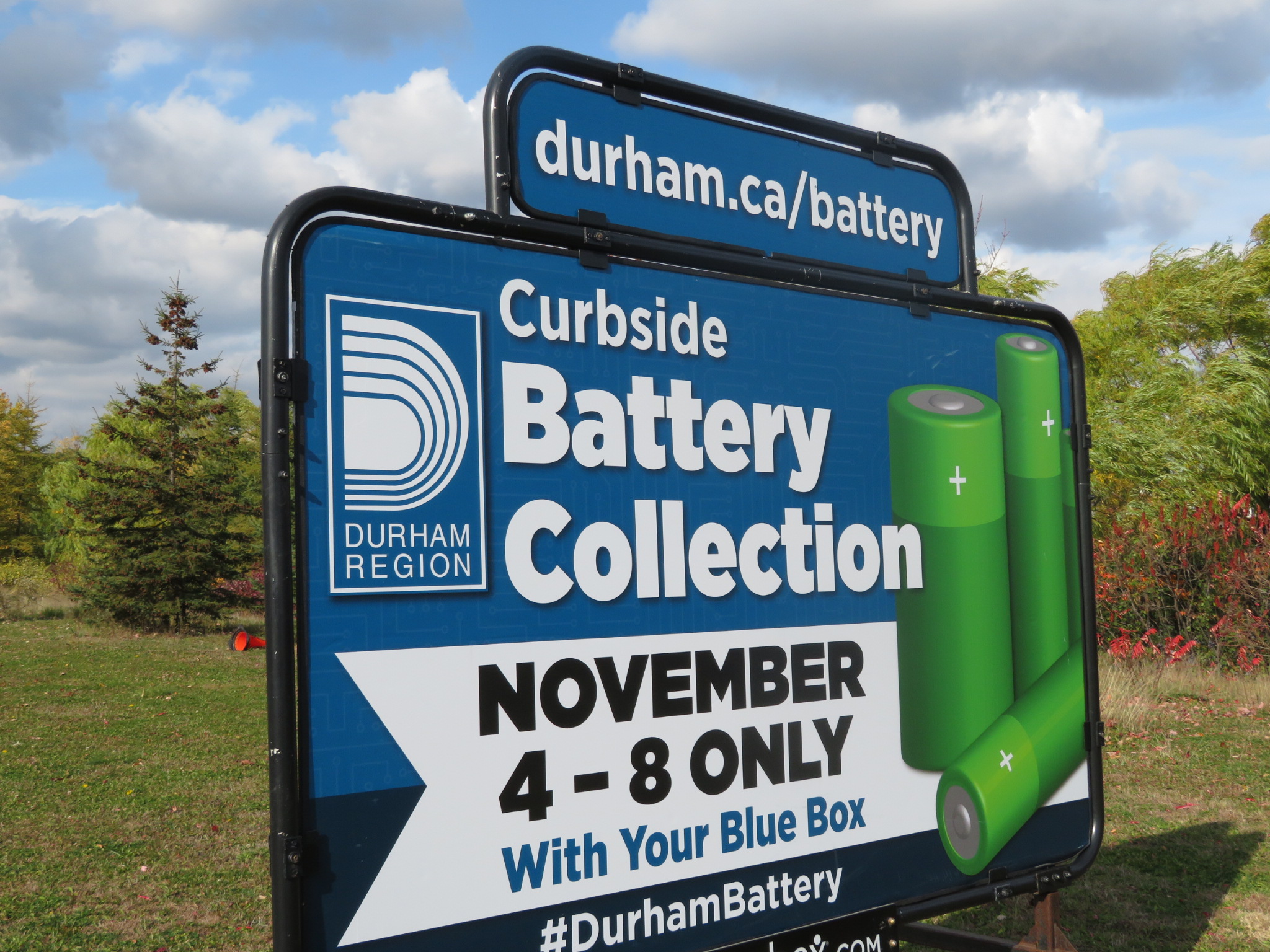
So it’s somewhat understandable if we can entertain thoughts of other-worldly or wonder-computer ways of making everyday life different. But everyday life is exactly where we–in this current dimension and in our present hominid form–can make a difference. We could start, as prodded by the sign n the photo, with how we dispose of batteries 

And, if and when the aliens do come, maybe they’ll be impressed with what we’ve undone with the place.

Genesis 1:31

Having Issues

A certain world leader recently referred to his own “great and unmatched wisdom.” You and I might speak of ourselves in such terms–in a tone of light self deprecation. He wasn’t joking.

Most of us would find his claim laughable or just plain pathetic. If we are ruthlessly honest, however, we might harbour self perception that is not dissimilar.

Maybe you have avoided obviously disruptive or destructive living. You figure you have it pretty much all together. So you don’t condescend, manipulate,dominate, move any or all conversation to your own person, bestow your ‘help’ and advice unbidden on others? You have, that is, no issues at all?

Truly impoverished are those if us who consider that only others “have issues.” We are then missing the true wonder of the humanity within us and of which we each are part. Such awareness and self discovery leads any of us with any consciousness to seek growth in our understanding and manner of relating to others and the world at large.

Consider: “We are God’s children now; what we will be has not yet been revealed” (1John 3:2).

Feeling inadequate, failed? God knows what fulfillment you are yet to know.

Feeling smug? You are missing something.

The Harvest Factor

Yes, there are backyard and community vegetable gardens. There are still family farms. But fewer of us all the time are connected to the land and the seasons, apart from, say, hiking and skiing, or what sport we take a short break from watching to have meaningful communication with Grubhub.

It is Harvest Thanksgiving weekend here in Canada. That evokes the sensory feast of food, family and friends, along with, we would more than just wish, practical acknowledgement of those who are lacking those things.

If we consider even more deeply what harvest thankfulness has always been about, it is at least as much about process as result. There is bounty in the experience of community. It’s about people having pitched in when a farmer took ill or was injured, conversations around the farm kitchen table. Think about other things we might well be thankful for. There is abundance of life in the experience and love that has led to the things we enjoy.

I appreciate the mindfulness that lives in (not for) the moment. But each moment is a seed. What are we cultivating?

Genesis 1:12